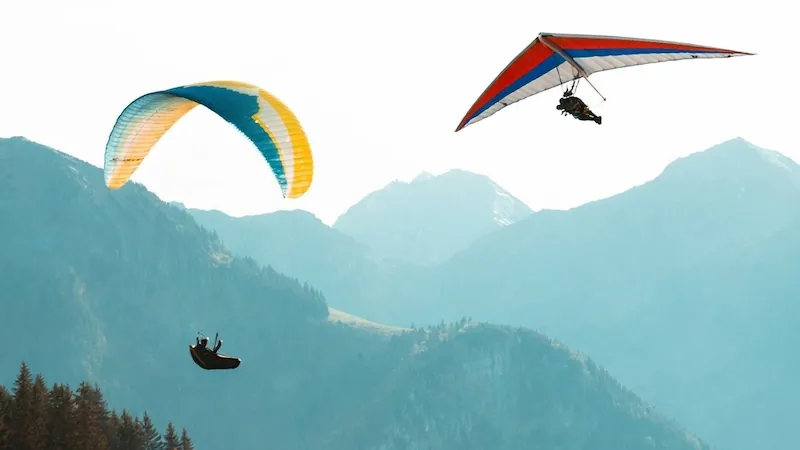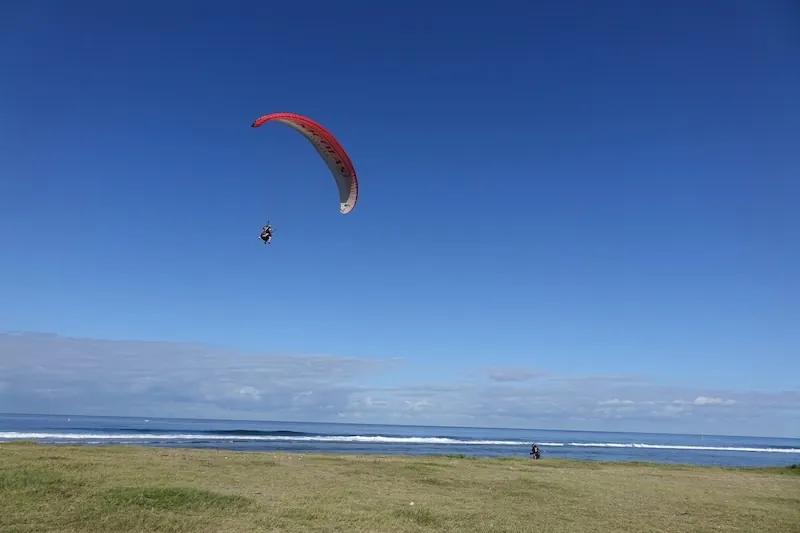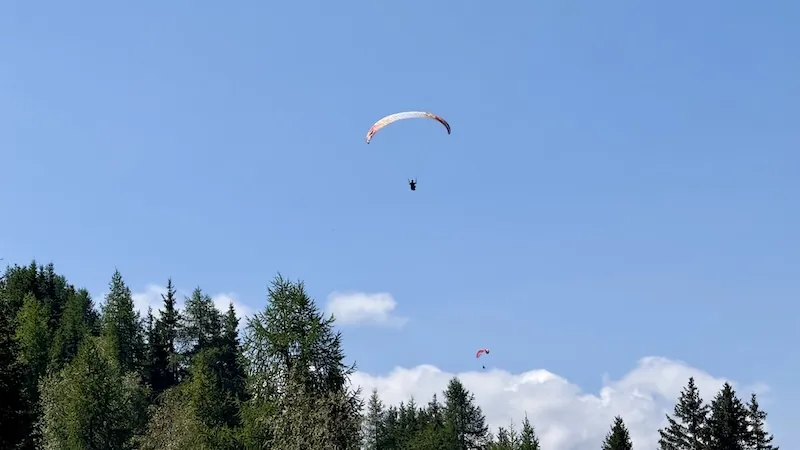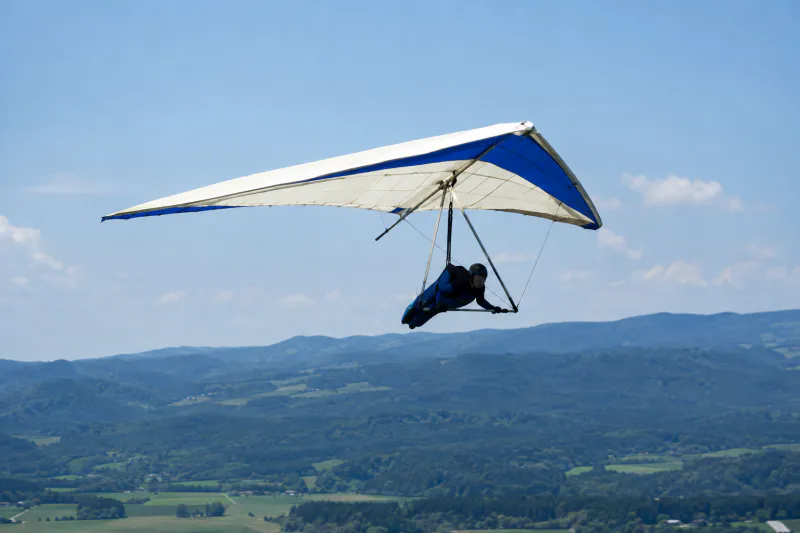
On Sunday 20 September 2026, the last morning of the Coupe Icare at Saint-Hilaire-du-Touvet, a tandem hang glider got into trouble seconds after take-off and struck the cliff below the launch. The pilot, an experienced 29-year-old, and his 45-year-old passenger were both killed. The organisers spoke of a serious technical problem right after take-off, in what were described as good flying conditions. The Grenoble prosecutor has opened an investigation, and until it reports, the cause is not known. Flying was suspended for the rest of the day. It was the festival's first fatal accident since 2015, and the fourth in its 53 editions.
Two deaths at the world's largest free-flight gathering, in front of spectators, raise a legitimate question: is hang gliding safe? A fair answer needs numbers rather than impressions, so this post starts there.
What the figures say
Hang gliding is a small sport, and small numbers make for noisy statistics. With that caveat, the figures that exist point the same way.
- Per flight. A UK study from 2011 put the risk at about one death per 116,000 flights, which its authors compared to the risk of sudden cardiac death while running a marathon.
- Per pilot. A commonly cited worldwide estimate is around one death per 1,000 active pilots per year.
- United States. USHPA, the national association, has recorded an average of roughly four hang gliding fatalities a year since the early 1990s, with bad years well above that: ten in 2015 and eight in 2016, among a few thousand active hang glider pilots.
- Germany. DHV figures for 2017 to 2019 show about two fatal hang gliding accidents a year against about nine for paragliding. Hang glider pilots are only around 6% of the DHV's 39,000 members, so per pilot the hang gliding rate works out at several times the paragliding rate: roughly three to five times, depending on whether you count pilots or flight hours.
Two things stand out. First, the risk per flight is low: an average pilot flies for many years without an accident. Second, the risk per pilot is higher than in paragliding, and noticeably so. Both are true at once.
Why hang gliding carries more risk than paragliding
The rigid wing that makes a hang glider the better aircraft also changes where the danger sits.
- Speed. A hang glider lands significantly faster than a paraglider. A mistimed flare or a gust on final has more energy behind it, and landings are where most of the sport's broken bones happen.
- The hook-in. The pilot's harness is attached to the glider with a carabiner before launch. Running off a hill without being hooked in is a mistake unique to hang gliding, and it has killed experienced pilots. The hang check, lifting the glider and hanging in the harness immediately before the run, exists because of it.
- Launch. A hang glider needs a clean run with the nose at the right angle. A light or crossed wind, or a nose pushed too high or too low, can put the glider into the slope before it is flying.
- Tumbling. A hang glider cannot collapse like a paraglider, but in strong turbulence it can be pitched nose-down past the point of recovery. Modern gliders carry dive-recovery devices for this reason, and pilots avoid strong midday air on sites known for it.
- Towing. In flat country most hang gliding starts behind a winch or a microlight. Lockouts and line problems in the first seconds of a tow are a recognised category of accident.
In return, a hang glider handles wind and rough air that would ground a paraglider, does not collapse, and glides far better when you need to reach a landing field. The risks differ in kind, not only in size. Hang gliding vs paragliding compares the two aircraft in full.
What makes hang gliding safe
- Training. Accident rates fell sharply once structured training replaced the trial and error of the 1970s. Schools and pilot ratings are run by the national associations (FFVL in France, DHV in Germany, USHPA in the US, BHPA in the UK), and instruction is mandatory in many countries. Learning takes longer than for paragliding; that time is the safety margin.
- Certified gliders. Modern gliders are built to HGMA, DHV or BHPA standards, with luff lines or sprogs that pull the nose up if the glider is pitched over. Structural failure of a certified, maintained glider is rare.
- The hang check, every launch. Hooked in, leg loops closed, carabiner locked, then a lift and hang before the run. Skipping it is how pilots with thousands of flights get killed.
- A reserve parachute in the harness, repacked on schedule, and a helmet on every flight.
- Weather discipline. Most fatal accidents involve conditions, not equipment. Choosing not to launch in strong or crossed wind is the skill that keeps pilots alive.
- Currency and site knowledge. Skills fade over a winter. A first flight of the season, at a new site, in strong conditions stacks three risks; good pilots take them one at a time.
Tandem flights
The Coupe Icare accident involved a tandem, and it would be dishonest to pretend that does not weigh on anyone considering a tandem flight. The wider picture is still that instructor-flown tandems are the safest way into either sport: the pilot is a professional, the glider is built for two, and the conditions are chosen for the passenger, not for the pilot's ambition. What happened at Saint-Hilaire will be established by the investigation, and if there is a lesson in it for the sport, the hang gliding community will publish it, as it has after previous accidents. One accident does not change the statistics; it is a reminder of what they mean.
How instruments help
No instrument makes a launch safe, but instruments remove guesswork in the air. A vario shows sink and lift before you feel them, airspace alerts keep you clear of zones you cannot see, and live tracking means someone knows where you are. Wingman works for hang gliding as well as paragliding: live tracking shares your position with friends or family in real time, and every flight is logged for review afterwards.
So, is hang gliding safe?
It is safer than it was, less safe than paragliding per pilot, and, per flight, comparable to sports that nobody calls dangerous. Almost all of the risk sits in a handful of moments: the hook-in, the launch run, the landing flare, and the decision to fly at all in the conditions of the day. Those moments are trainable, and the pilots who treat them with respect fly for decades.
For the same honest look at the other wing, read is paragliding safe.
Frequently asked questions
How many people die hang gliding each year?
In the United States, around four a year on average according to USHPA records, with peaks of eight to ten in the worst years. In Germany, about two a year over 2017 to 2019 according to DHV figures. Worldwide numbers are not collected centrally.
Is hang gliding safer than paragliding?
Per pilot, no: the German figures put the fatal-accident rate at several times the paragliding rate. Per flight the risk is low in both. The accidents differ in kind: paragliders collapse in turbulence, hang gliders do not, but they launch and land faster and can be launched unhooked.
What is a hang check?
The last check before launch: the pilot, hooked in and with the harness closed, lifts the glider and hangs from it to confirm the carabiner is attached and locked. It takes five seconds and prevents the sport's most avoidable fatal accident.
Is a tandem hang gliding flight safe?
Instructor-flown tandems have a strong safety record and are the standard way to try the sport. The Coupe Icare accident is under investigation; nothing published so far changes the general picture, and if the investigation finds a lesson, the associations will circulate it.