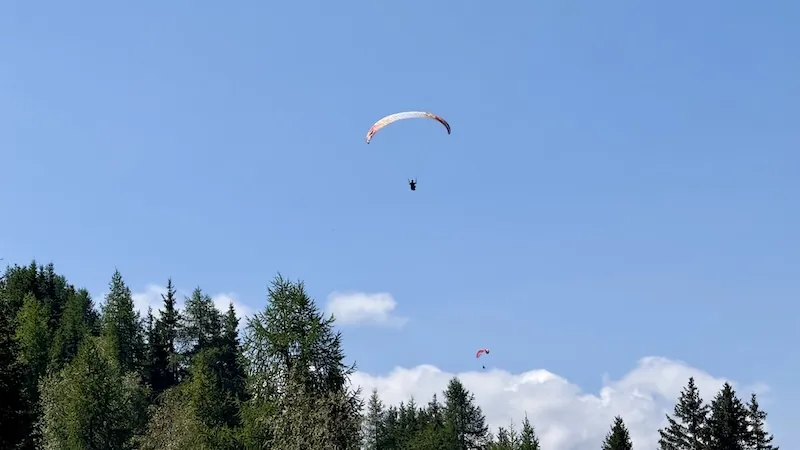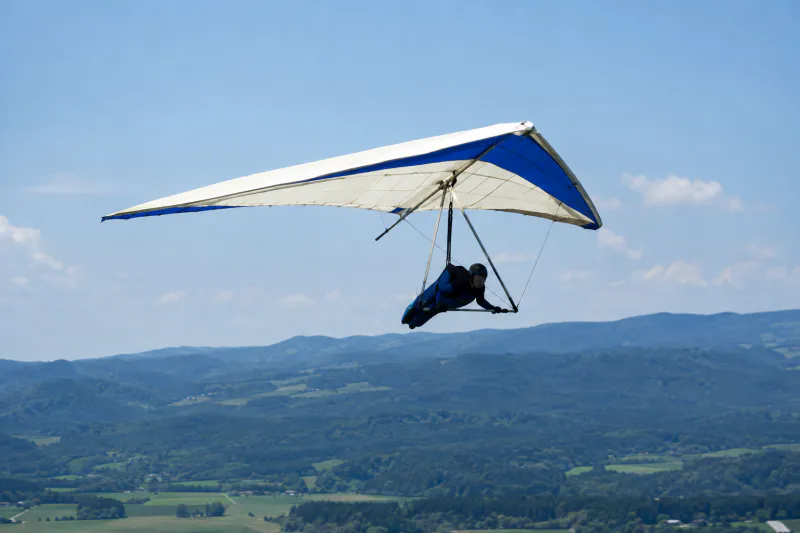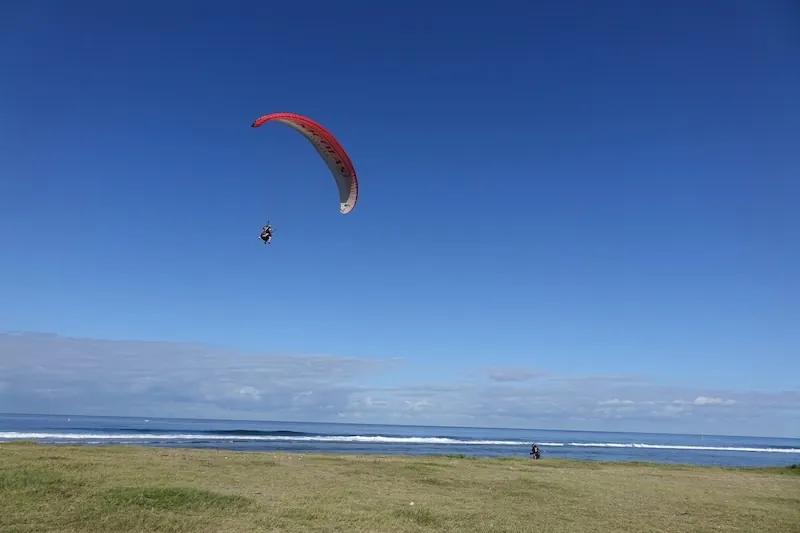
The honest answer is that paragliding is neither the death wish it looks like from the ground nor a risk-free ride. It sits in the same band as skiing, scuba diving and climbing: a sport with real risks that trained people manage every day. The important part is that most of the risk is under the pilot's control.
Why it looks more dangerous than it is
You are high up, under a fabric wing, with nothing around you. No cockpit, no engine, no frame. The exposure is real, but it is not the same thing as danger. Certified wings (EN-A and EN-B for most pilots) are tested for how they recover from collapses, and every pilot flies with a reserve parachute that is inspected and repacked on a schedule.
Where accidents actually happen
Incident reports from national federations are consistent on this: most accidents are not mid-air failures. They cluster around a few situations.
- Launch and landing. The two moments closest to the ground, where a small mistake has no room to be corrected.
- Flying in conditions beyond your level. Strong thermals, strong wind, turbulence behind a ridge. The air did not change; the decision to fly in it did.
- Wing choice. Flying a higher-performance wing than your experience justifies. Higher classes recover less on their own and demand more of the pilot.
- Complacency. Skipping the pre-flight check, flying a wing that is out of trim, or letting the reserve repack slide.
Notice what is not on that list: equipment simply failing. It happens, but rarely, and almost always on gear that was not maintained.
What makes paragliding safe
- Training with a certified school. National federations (FFVL in France, DHV in Germany, USHPA in the US, BHPA in the UK) license schools and instructors. A course takes weeks, not a weekend.
- Weather discipline. Good pilots cancel far more flights than beginners expect. Reading wind, thermal strength and the forecast is the core skill; steering is the easy part.
- The right wing. An EN-A or EN-B wing for your first years, whatever the performance figures of the one your friend flies.
- Maintained equipment. Annual wing checks, reserve repacks, a helmet on every flight.
- Staying current. Skills fade. An SIV course (simulated incidents over water) teaches you what a collapse feels like and how the wing recovers, before it happens over rocks.
What about tandem flights?
If you are asking because you are considering a tandem, the picture is different again. Commercial tandem pilots fly hundreds of flights a year on wings designed for stability, in conditions they choose. You need no experience: a short briefing, a few running steps at take-off, and the pilot does the rest. It is the safest way to find out whether the sport is for you.
How instruments help
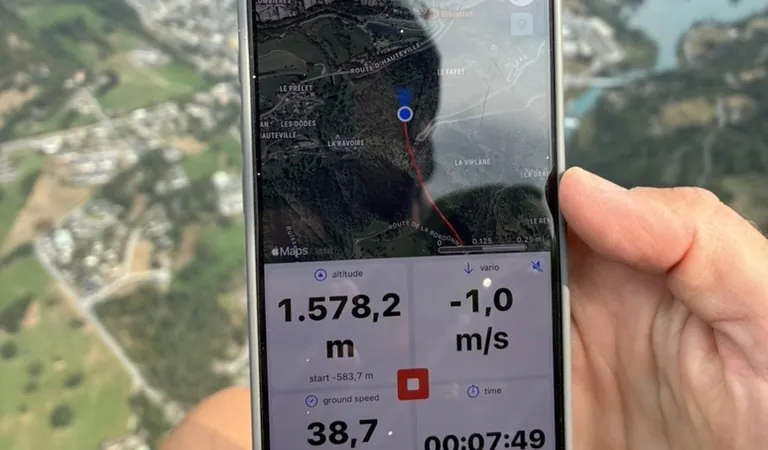
An instrument does not make you safe, but it removes guesswork. A vario shows sink before you feel it, airspace alerts keep you out of controlled zones you cannot see, and a flight log lets you review a decision afterwards. Wingman shows nearby airspace and warns you as you approach it, and live tracking means someone on the ground knows where you are.
So, is paragliding safe or dangerous?
It is as safe as the pilot makes it. Trained, patient, flying a suitable wing in suitable conditions: a calm sport where the biggest risk is a twisted ankle on landing. Untrained, impatient, or flying because you drove three hours and do not want to go home: genuinely dangerous. The sport rewards people who are willing to walk back down.
If you want to know what the flying itself is like, read what paragliding is and how it works.