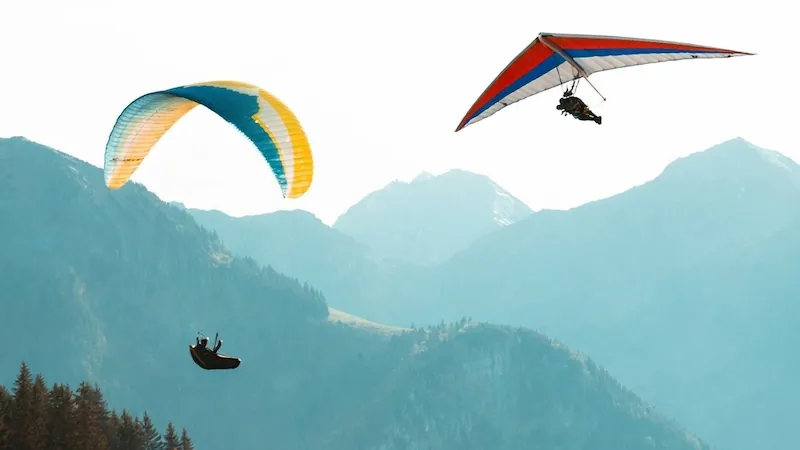
From the landing field, hang gliding and paragliding look alike: a wing, a person, no engine. Up close they are different aircraft flown by different kinds of pilot. This is what separates them, and how to decide which one to learn.
Equipment
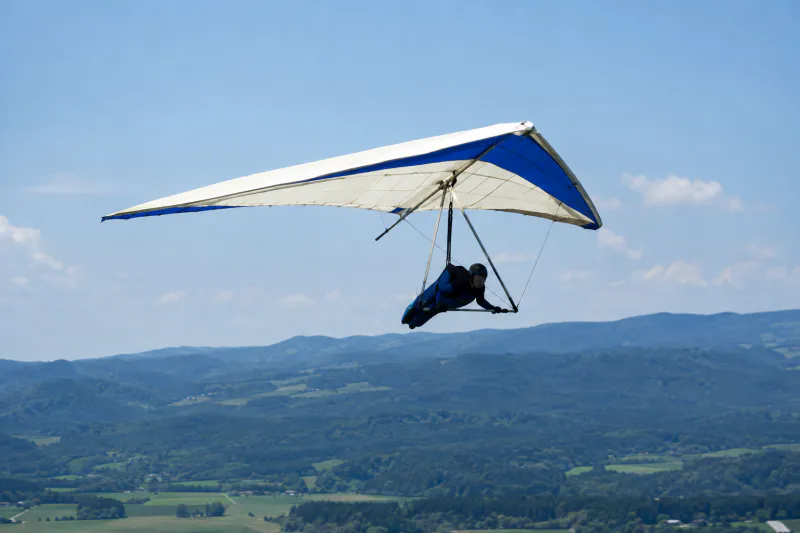
A hang glider is a rigid wing: an aluminium frame with a fabric sail stretched over it, usually a triangle around ten metres across. The pilot hangs prone in a harness below it and steers by shifting body weight against a control bar.
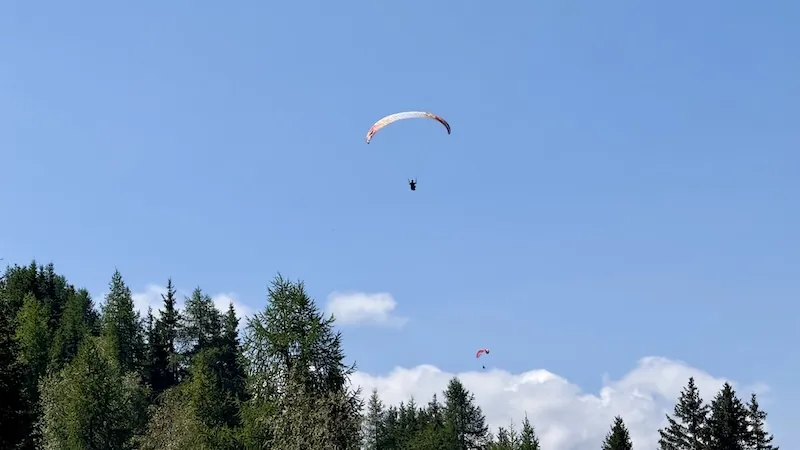
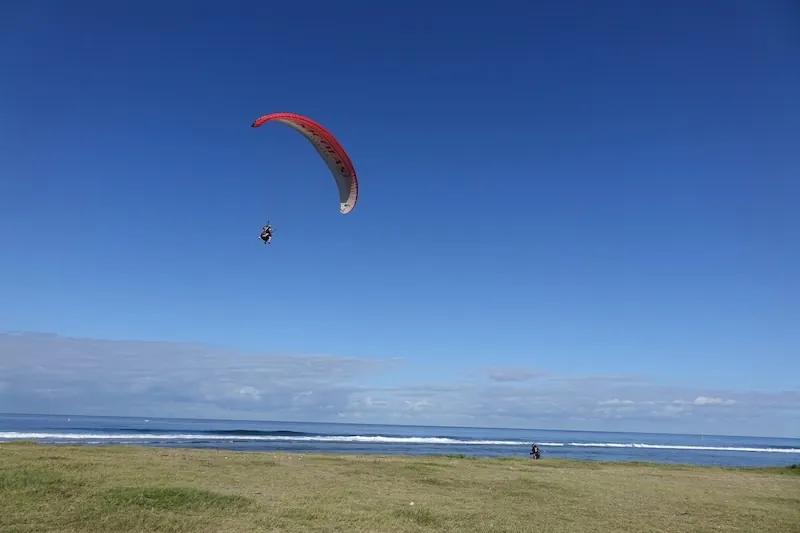
A paraglider has no frame. The wing is a fabric canopy that inflates through openings along its leading edge, held in shape by air pressure and a web of lines. The pilot sits in a harness and steers with two brake handles that pull the trailing edge down on either side.
How they fly
The rigid wing makes the hang glider faster and more efficient: cruising speeds are higher, the glide is flatter, and it copes with wind and rough air more comfortably. Paragliders fly slower, glide less far, and are more affected by wind, which limits the days you can fly. In return they turn tighter in a thermal and land in a much smaller space.
Both use the same lift: thermals rising from sun-warmed ground, and ridge lift where wind is pushed up a slope. Neither has an engine.
Learning to fly
Paragliding is quicker to learn. A beginner course typically takes a couple of weeks; the wing is forgiving at low speed, and you can practise ground handling on any grassy slope. Tandem flights are widely available for a first taste.
Hang gliding takes longer. The glider is heavier and faster, launches and landings are less forgiving, and early training often happens on low training hills or behind a tow. Fewer schools teach it, so you may travel further to learn.
Transport and convenience
This is the biggest practical difference. A paraglider packs into a rucksack of around 15 kg that goes on a bus, in a car boot, or on your back up a mountain with no road. A hang glider is a five-metre package that needs roof bars and a launch you can drive to. If you want to travel with your wing, or walk up to fly down, paragliding is the only realistic option.
Which is safer?
Neither is safe by default and neither is reckless. Hang gliders are more robust in turbulence and fly in wind that would ground a paraglider; paragliders land slower, and in a rough landing a fabric wing is kinder than a frame. In both sports, accidents follow the same pattern: launch, landing, and conditions beyond the pilot's level. More on that in is paragliding safe.
Instruments
Both sports depend on the same information in the air: climb rate, airspace, position. A phone app such as Wingman gives a hang glider or paraglider pilot a vario, an airspace map, waypoints and a flight log; the instrument does not care what is above it.
Hang gliding or paragliding: how to choose
- You want speed, distance, flying in stronger wind, and you have a car with roof bars: hang gliding.
- You want to learn quickly, fly on holiday, hike to launches and keep the wing in a bag: paragliding.
- You are not sure: take a tandem flight in each. Most sites offer paragliding tandems; hang gliding tandems are rarer but exist at the larger sites.
Plenty of pilots end up doing both. If you are leaning towards the fabric wing, what is paragliding covers how it works and how to try it.